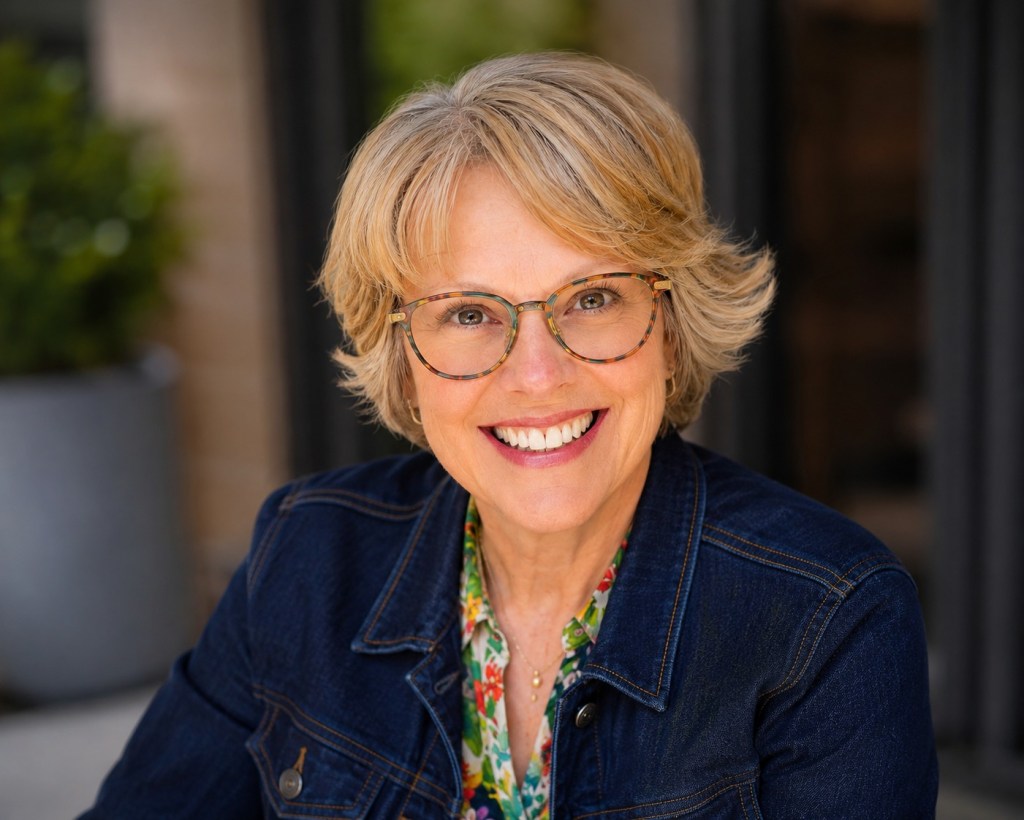
Lauri Questions
People are often surprised to learn that I almost failed creative writing.
I suppose I understand why. After all, I recently wrote a collection of essays called The Women of the Spring Valley Loop, and I am now spending an inordinate amount of time interviewing relatives, collecting family stories, and writing about people who have been dead for decades. On paper, it looks as though I have always been headed in this direction.
I wasn’t.
At least I didn’t think I was.
I did major in journalism in college, and I have always loved books. Some of my earliest memories involve listening to stories, reading stories, or asking questions about stories. In fact, if you ask my family, they will tell you that asking questions was practically a personality trait.
Not all questions, mind you.
I was perfectly capable of asking practical questions, but those were never the ones that interested me most.
What interested me were the questions nobody could answer.
Questions like, “Do you think she was happy?” or “Why do you suppose he never talked about that?” or “What do you think she felt when she left home and moved across the country?”
My family eventually gave these a name.
They called them “Lauri questions.”
The phrase was usually accompanied by a smile and occasionally an eye roll because nobody actually knew the answers. The people I was asking about had often been gone for years. Sometimes for generations.
Still, I kept asking.
Looking back, I think those questions explain a lot about how The Women of the Spring Valley Loop came to be.
I grew up surrounded by stories. My mother loved history and books. Grandma Ruth loved genealogy. Family stories were woven into everyday conversation so completely that I never thought of them as anything special. Someone would mention a neighbor, which would remind somebody else of a one room schoolhouse, which would lead to a story about learning the polka, or a particularly hard winter. One story connected to another until entire afternoons disappeared.
The remarkable thing is that those stories made people real to me.
By the time I was old enough to appreciate it, I felt as though I knew many of the people who came before me. I knew who was practical and who was stubborn. I knew who loved to dance and who loved flowers. I knew who endured hardships that would have flattened me and somehow found a way to keep moving forward.
I also knew, without ever really thinking about it, that I was loved by all of them.
That may be the most important part of this story.
When I first sat down to write the essays that became The Women of the Spring Valley Loop, I told myself I was preserving family history. I wanted to remember the stories I had grown up hearing. I wanted my sons to know these women the way I knew them. I wanted there to be something more than names, dates, and census records.
But somewhere along the way, I realized I wasn’t really writing about family history.
I was writing about inheritance.
Not the kind that gets settled in a lawyer’s office.
The kind that gets passed hand to hand across generations.
Curiosity.
Resilience.
A love of books.
A sense of humor.
An appreciation for family stories.
The ability to find joy in ordinary things.
Those women gave me all of that.
The older I get, the more aware I become of what a gift it was to be raised by such sturdy people. None of them would have described themselves as remarkable. Most lived ordinary lives in southwestern Iowa. They raised children, kept houses, tended gardens, worried about bills, cared for aging parents, and showed up for the people they loved.
Yet their lives shaped mine in ways I am still discovering.
One by one, those women are gone now, and I find myself becoming the keeper of stories I once assumed someone else would always remember. Sometimes I catch myself telling one of their stories to Jake or Drew and realize I am now the voice carrying it forward.
That responsibility feels both heavier and more precious than I expected.
So how did a woman who almost failed creative writing end up writing The Women of the Spring Valley Loop?
I don’t think the answer is that I became a writer.
I think the answer is that I was raised by storytellers.
I was loved by remarkable women.
And I have been asking Lauri questions for as long as I can remember.
Eventually, those questions led me back to the people who shaped me, and once I found them there on the page, I wasn’t quite ready to let them go.